
Gut Health

Are you a good farmer of your gut microbiome?

I love the way naturopath and microbiome researcher Dr Jason Hawrelak describes our gut.

You’re the farmer. Your gut microbiome is your garden.

What grows depends on what you feed it.

Most people assume that when they swallow a probiotic, the good bacteria settle into the bowel and stay there for good.

For most strains, they don’t. They pass through, do some useful work on the way, and then they’re gone.

That doesn’t make probiotics useless. I use them often, and the right strain at the right time can make a real difference. But no probiotic can build a thriving garden if you’re not feeding the bacteria already living there.

This surprises a lot of people: there’s no fibre in meat, chicken, fish, eggs or dairy. Fibre only comes from plants.

Vegetables, herbs, fruit, berries, nuts, seeds, legumes, whole grains and resistant starch all feed different microbes. And different microbes have different favourite foods.

That’s why variety matters so much. Eating the same three vegetables every day feeds the same few bacteria. A wide range of plants across the week feeds a whole ecosystem.

Try this: count how many different plants you eat in a week. Herbs, spices, nuts and seeds all count. Then try to beat it next week.

Dr Hawrelak calls prebiotics selective fertilisers. Not all fibre counts. Prebiotics specifically feed the beneficial bacteria you want more of.

Great sources include garlic, onion, leeks, asparagus, artichokes, legumes and foods rich in resistant starch, like cooked and cooled potatoes or rice and slightly green bananas.

I aim for around 40 to 45 g of fibre a day for most adults, adjusted to the person.

Most Australians fall well short. Only about 1 in 4 adults eat even the basic recommended amount, fewer than 1 in 5 reach the higher target linked with lower chronic disease risk, and just 6.5% eat enough vegetables.

The funny thing is, most people I see think their fibre intake is pretty good. Most are getting around half of what I’d like to see.

The number is only half the story. Forty grams from a handful of foods isn’t the same as forty grams from a wide variety of plants.

If your diet is low in fibre now, build up gradually. Jumping straight to 40 g is a fast track to bloating. And if you have IBS, SIBO or a sensitive gut, the type and amount of fibre needs to be tailored to you. That’s exactly where I can help.

Legumes and beans are the fibre champions. A cup of cooked lentils has around 16 g of fibre, black beans around 15 g and chickpeas around 12 g. That’s roughly what you’d get from three cups of cooked broccoli. One cup of legumes gets you more than a third of the way to 40 g.

They’re also natural prebiotics, rich in resistant starch and packed with plant protein. If you make one change after reading this, add a serve of legumes every day.

Here’s my shortlist. Rotate through as many as you can each week, and remember: the more variety, the bigger your garden grows.

  • Legumes and beans (your number one fibre source): lentils, chickpeas, black beans, kidney beans, cannellini beans, split peas, edamame and tempeh.
  • Other fibre heavy hitters: raspberries (around 8 g a cup), pears with the skin on, quinoa, buckwheat, and chia and flaxseeds.
  • Prebiotic superstars: garlic, onion, leeks, asparagus, globe and Jerusalem artichokes, dandelion greens, slightly green bananas and pistachios.
  • Polyphenol powerhouses: these feed beneficial bacteria like Akkermansia and Bifidobacteria. Think blueberries, red onion, purple rice, black beans, skin-on almonds, extra virgin olive oil, green tea and cocoa.
  • Gentler options for a sensitive gut: kiwifruit, oranges, buckwheat, brown rice, firm tofu, pomegranate, carrots, macadamias and small serves of canned chickpeas.

What does 40 g look like on a plate? Buckwheat porridge with chia, berries and pistachios for breakfast. A lentil and roast vegetable salad for lunch. A tempeh or tofu stir-fry with brown rice and greens for dinner. That’s your 40 g, and then some.

Want it all in one place? My Good Gut Guide is a 7-page download with everything you need to feed your gut garden:

  • a printable 30 plants a week tracker
  • the best fibre, prebiotic, polyphenol, pectin and ellagic acid foods
  • how to build up your fibre without the bloat
  • sleep, stress and lifestyle tips for a healthier microbiome
  • three easy gut-loving recipes

You can guess what’s happening in your gut, or you can find out.

GutIQ Metagenomic Mapping uses advanced DNA sequencing to identify more than 28,000 microbial species in your gut, including bacteria, fungi and viruses. Most stool tests only look for a short list of usual suspects. This is the most detailed map of your gut garden available.

It also shows:

  • butyrate and other short-chain fatty acids: how well your bacteria are feeding your gut lining
  • beta-glucuronidase: a clue to whether oestrogen is being cleared or recycled
  • zonulin: a marker of gut barrier integrity, often called “leaky gut”
  • calprotectin: inflammation in the bowel
  • secretory IgA: your gut’s front-line immune defence
  • pancreatic elastase and steatocrit: how well you’re digesting food and absorbing fat

It’s worth considering if you have bloating, gas, constipation, loose stools or IBS, food reactions, hormone symptoms, skin issues, low energy, an autoimmune condition, or a long history of antibiotics or reflux medication.
Parkinson's, Toxicity

Researchers are increasingly worried about everyday toxin exposure. Should you be too?

Before you have even left the house this morning, you have probably been exposed to dozens of synthetic chemicals. In your shampoo. Your deodorant. The plastic container you reheated last night’s leftovers in. The air on your drive to work.

Most of us never give it a second thought. Until something goes wrong.

Many chronic diseases take years, even decades, to develop. By the time symptoms appear, the exposures behind them may have been quietly building for a very long time.

Prevention starts long before symptoms do.

Parkinson’s is the fastest-growing neurological condition in the world. It is easy to assume it runs in families. For most people, it does not.

Neurologist Dr Ray Dorsey, co-author of Ending Parkinson’s Disease, points out that only about 13% of people with Parkinson’s carry a known genetic cause or risk factor. He goes further, describing Parkinson’s as largely a man-made disease, with pesticides, industrial solvents such as TCE and air pollution among the main suspects.

For most people, the answer is more likely to lie outside our DNA.

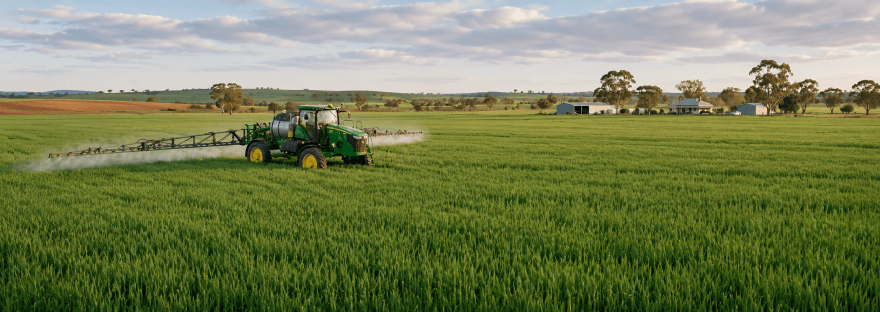
Paraquat has been banned, phased out or withdrawn in more than 70 countries. In Australia and the USA, it is still legal.

In June 2026, the Australian Pesticides and Veterinary Medicines Authority (APVMA) decided to keep it on the market, with tough new restrictions on application rates, permitted uses, mixing and loading, backpack sprayers and protective equipment.

So why the controversy? A large body of research linking paraquat with Parkinson’s:

  • A 2011 study found people who had used paraquat or rotenone had about 2.5 times the odds of Parkinson’s.
  • A 2024 study in California’s Central Valley found people working near paraquat applications year after year had more than twice the odds. Living nearby was also linked with higher odds.

The APVMA’s position is that the weight of evidence does not show approved use increases Parkinson’s risk. Parkinson’s Australia and other researchers are not convinced.

Not everyone exposed to paraquat will develop Parkinson’s. Age, genetics and lifestyle all play a part. But if you have worked in farming, horticulture or anywhere herbicides were sprayed regularly, this deserves your attention.

In 2022, the largest analysis of its kind pooled sperm count data from men around the world, including Australia. The findings are confronting:

  • Average sperm concentration fell from about 104 million per mL in 1973 to 49 million per mL in 2018. That’s a drop of 51.6%.
  • The decline more than doubled after 2000, from 1.16% a year to 2.64% a year.
  • For the first time, the fall was confirmed in South and Central America, Asia and Africa, not just Western countries.

Fertility is often treated as a women’s issue. It isn’t. Male factors contribute to around half of all infertility cases, yet men are far less likely to be tested or supported.

To put that in perspective, the chance of conceiving starts to fall once sperm concentration drops below about 40 million per mL. The average man is now not far above that line.

Nobody knows for certain, but one explanation stands out. A man’s ability to make sperm is largely set before he’s born, during a short window when his testes are forming in the womb. Exposure to hormone-disrupting chemicals by the pregnant mother can affect his sperm production for life.

Now think about the timing. The men measured after 2000 were mostly born in the 1970s and 1980s, the first generations whose mothers were surrounded by plastics, synthetic fragrance and pesticides every day. Global plastic production has grown from a few million tonnes in 1950 to more than 400 million tonnes a year today.

Lifestyle plays a part too, but it doesn’t explain everything.

What your mother was exposed to may be shaping your fertility now. And what you’re exposed to today may shape your children’s.

Phthalates (found in synthetic fragrance, soft plastics and some personal-care products) and bisphenols like BPA (found in some plastics, can linings and shop receipts) can mimic, block or scramble your body’s hormone signals.

  • In a landmark study led by Dr Shanna Swan, baby boys whose mothers had higher phthalate levels during pregnancy were more likely to show changes in genital development linked with lower male hormone activity in the womb.
  • US government biomonitoring found BPA in the urine of 93% of people tested.

Here’s the hopeful part. It takes around three months to make a new batch of sperm, so the changes you make today show up in the sperm of three months’ time. If you’re planning a pregnancy, both partners should start cutting back now.

Bowel cancer in Australians in their 30s has nearly tripled since 2000. In Australians in their 20s, it has more than doubled.

Of 50 countries compared in The Lancet Oncology, Australia had the highest rate of bowel cancer in people under 50. And it’s not only bowel cancer. Breast, thyroid, kidney and prostate cancers are also rising in Australians under 50.

Our genes haven’t changed in 25 years. Our environment has.

Only around 5 to 10% of cancers are caused by inherited gene mutations. The rest are shaped by what we eat, drink, breathe and put on our skin, day after day, year after year.

So what are we living with? Some of the chemicals in everyday Australian life now carry cancer classifications from the World Health Organization’s cancer agency (IARC):

  • Forever chemicals (PFAS). PFOA was classified in 2023 as carcinogenic to humans, IARC’s highest category. Australia banned it, along with two other PFAS, from 1 July 2025. But there are thousands of PFAS, and most non-stick pans are still coated in PTFE, another forever chemical. “PFOA-free” doesn’t mean PFAS-free. ABS testing found PFAS in the blood of more than 85% of Australians.
  • Glyphosate. The world’s most widely used weedkiller has been classified as probably carcinogenic to humans since 2015, and the highest exposure has been linked with a 41% higher risk of non-Hodgkin lymphoma. It’s still sprayed on Australian farms, in council parks and along footpaths, and sold off the shelf at hardware stores as Roundup.
  • TCE. This degreasing and dry-cleaning solvent is classified as carcinogenic to humans and linked with kidney cancer. It’s the same chemical linked with Parkinson’s.
  • Chemical hair straighteners. In a study of more than 33,000 women, frequent users had more than double the risk of uterine cancer by age 70.

Don’t wait for the government to catch up. Bans are slow, they cover only a handful of the thousands of chemicals in use, and older PFAS linger in the body for years. PFOA takes around two to four years just to drop by half.

Every swap you make, from your frying pan to your water filter, is one less exposure your body has to carry. Toxins aren’t the only cause of cancer. But they’re one you can start doing something about today.

Microplastics and nanoplastics have now been found in human blood vessels, liver, kidneys and brain tissue. Scientists are still working out what that means long term.

I’m not waiting for the final answer when the fix is this easy. Stop heating food in plastic, and cut back on single-use plastics wherever you can.

  • Stop heating food in plastic.
  • Switch to glass or stainless steel.
  • Cut back on synthetic fragrance at home and in the bathroom.
  • Swap personal-care and cleaning products for better ones as they run out.
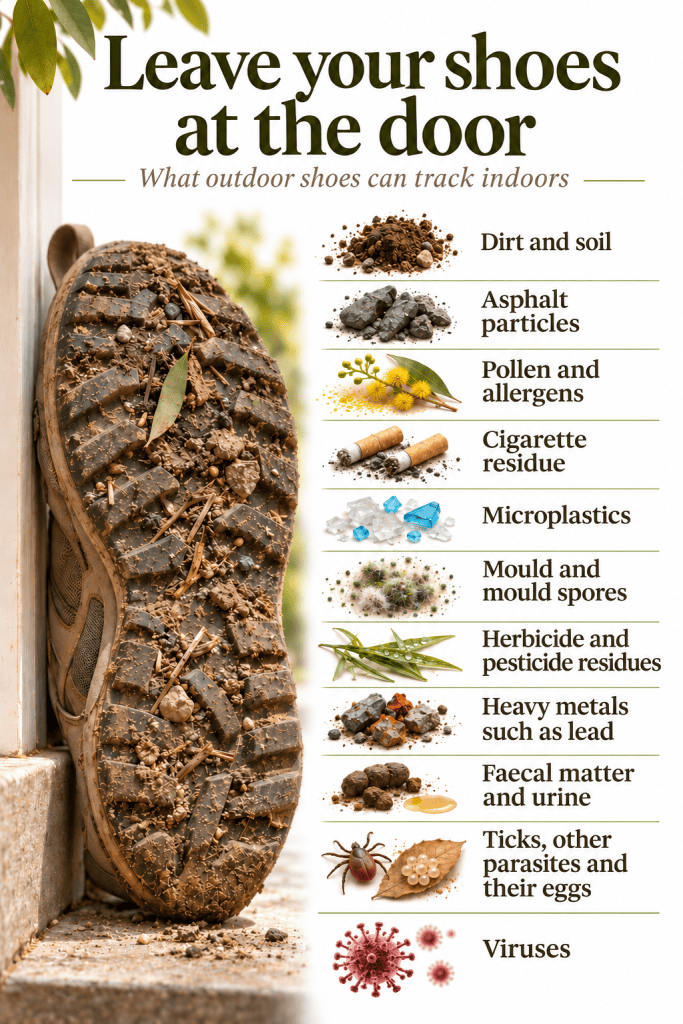
  • Take your shoes off at the door.
  • Fix damp, leaks and mould promptly.
  • Open the windows. Ventilation matters.
  • Go easy on pesticides and herbicides in the garden.
  • Wear proper protective gear around paint, solvents and chemicals.
Toxins you may bring into your home daily

You can’t undo an exposure from 20 years ago. But you can find out what your body is dealing with now.

The NutriPATH All-Tox Profile is a single urine test covering mould toxins, heavy metals, pesticides and herbicides, plastic-related chemicals, PFAS and solvents. For even more detail, the MOE-Tox Complete Profile adds organic acids, giving extra insight into energy production, detoxification pathways and gut microbial activity.

I particularly recommend testing if you have a history of:

  • mould or water damage at home or work
  • farming, horticulture or occupational chemical exposure
  • repeated renovations
  • heavy pesticide use
  • ongoing health concerns where your toxic load might be part of the picture

Your results show what your body has been exposed to and is carrying right now. Together with your history and symptoms, they let me build a plan to reduce your exposure and support your body’s natural detoxification pathways, so we’re working on the root cause rather than just managing symptoms.

One urine sample, collected at home then sent to the lab. Both testing packages include a 1 hour telehealth consultation with Naturopath Lisa to go through your results and your personalised plan.