
Ozempic, Wegovy and Mounjaro have made GLP-1 a household name. But here’s what most people don’t realise: your body already makes it.
GLP-1 is a hormone your gut releases after you eat. It tells your brain you’re full, helps manage blood sugar and slows how quickly your stomach empties. Think of it as one of your body’s natural appetite brakes.
The part of the injections people don’t talk about
Weight-loss injections deliver a far stronger, longer-lasting dose than your body ever makes on its own. They slow your stomach right down and act on the brain’s nausea centre.
That’s why nausea, reflux, constipation and bloating are so common. They’re not a fault in the drugs. They’re how the drugs work.
Herbalist Professor Kerry Bone notes that around half of people struggle with gut side effects or stop treatment. And the weight that comes off isn’t all fat:
- Up to 40% of the weight lost can be lean mass, including muscle. Professor Bone puts it even higher, at 40 to 60%.
- In women after menopause, semaglutide roughly doubles the usual rate of bone loss in the first year.
- In the US, 37% of people stop within a year. By three years, 86% have stopped.
- Once people stop, around 60% of the weight comes back within a year.
Losing muscle and bone, then putting the weight back on, is the worst of both worlds. So is there a gentler way to work with your own GLP-1? This is where herbal medicine gets exciting.
Bitter is better
Herbalists have given bitter herbs before meals for centuries, and research is now showing why. You don’t only have bitter taste receptors on your tongue. They’re all through your digestive tract, and when they’re switched on, your gut releases its own appetite-regulating hormones.
Bitter herbs like hops work in a completely different way to the injections. Instead of overriding your appetite, they prompt your gut to release its own fullness hormones, GLP-1, PYY and CCK, in time with your meals. As Professor Bone puts it, hops fine-tune your body’s system rather than replacing it.
The research is impressive:
- In a randomised trial, a single dose of hops extract cut how much men ate by 15 to 18%, while increasing GLP-1, PYY and CCK.
- In a 2026 randomised, double-blind trial of 150 adults with overweight or obesity, people taking 500 mg a day of a bitter hop extract during a 24-week weight-loss program lost more weight and more fat than those on placebo. And neither group lost muscle, based on body composition testing (BIA).
- In lab studies on human gut cells, feverfew was the most potent of the bitter herbs tested at increasing GLP-1 release.
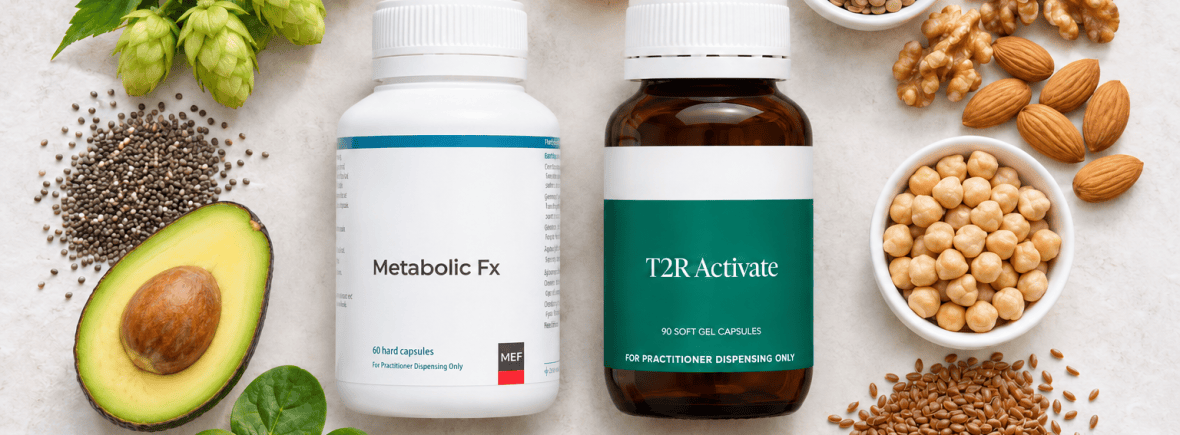
MediHerb T2R Activate combines hops and feverfew to switch on these bitter taste receptors.
The lemon compound that lifts GLP-1
Eriomin is a citrus flavonoid complex from lemons, rich in eriocitrin.
In a randomised trial in people with prediabetes, Eriomin increased GLP-1 by around 15% and improved several markers of blood sugar control and insulin resistance.
It’s one of the ingredients in BioMedica Metabolic Fx, alongside gymnema for sweet cravings, gentian and ginger for digestion, and chromium for blood sugar.
It also contains BPL1, a “postbiotic”. In a 3-month randomised trial in people carrying extra weight around the middle, it reduced waist size compared with placebo.
Food is still your strongest tool
Your appetite hormones respond to what’s on your plate. Protein, fibre and real, minimally processed plant foods all help you feel full and keep your blood sugar steady.
Battling cravings, energy crashes, weight creeping on around your middle, or weight that just won’t shift? Insulin resistance could be part of the story. Testing fasting insulin as well as fasting glucose gives a much clearer picture.
Your body already has its own appetite brake. Bitter herbs help you use it.
Not sure which formula suits you? That’s exactly what my $29 Supplement Advice is for.

