
Lung cancer rates are increasing in people who have never smoked.
That should make all of us stop and ask what else is driving disease in modern life.
One of the biggest and most overlooked answers is toxic load.
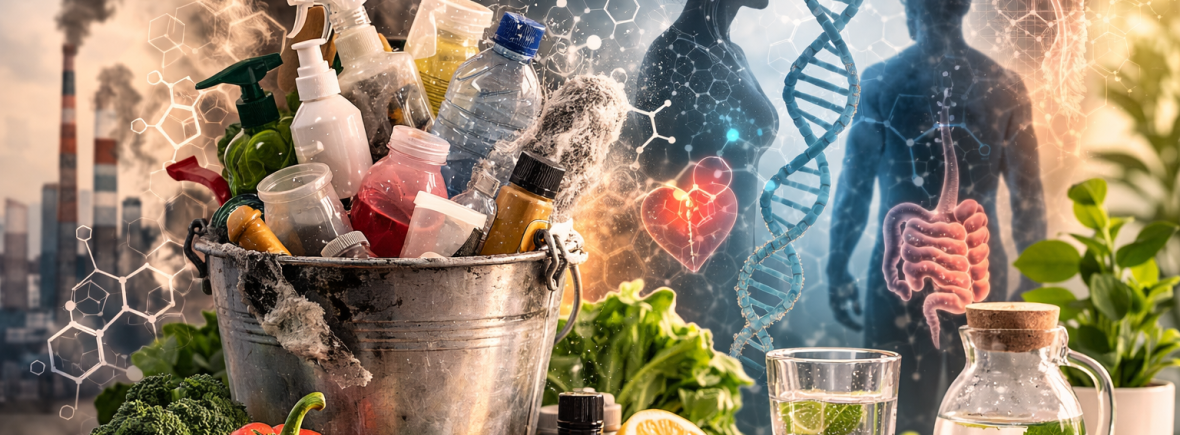
We are surrounded by toxins every single day, whether we realise it or not. They are in plastics, pesticides, food packaging, synthetic fragrances, mouldy buildings, polluted air, contaminated water, and everyday household products. Most of the time, the exposure is invisible. That is exactly what makes it so easy to underestimate.
This is a serious and often overlooked part of the modern health picture. It deserves far more attention than it currently gets.
Here are just some of the ways chemical exposure may be shaping human health, from hormone disruption and fertility challenges to cancer, brain development, and Parkinson’s disease.
HORMONES
Our hormones are being interfered with by chemicals that can mimic, block, or disrupt the body’s normal hormonal signals. These are known as endocrine-disrupting chemicals.
They can distort the body’s internal messaging system in ways that may affect fertility, puberty, menstrual health, pregnancy, thyroid function, and more. This includes xeno-oestrogens, which can behave like oestrogen in the body and may contribute to issues such as early puberty, fibroids, endometriosis, fertility problems, pregnancy complications, and hormone imbalance. There is also growing concern that these chemicals may be one of the factors contributing to autoimmune conditions and thyroid disorders such as Hashimoto’s in susceptible people.
Some chemicals may also disrupt male hormones by increasing the conversion of testosterone into oestrogen or otherwise shifting the normal testosterone-oestrogen balance.
CANCER
Cancer is another reason this conversation matters.
Some environmental toxins are recognised carcinogens, while others are linked with increased cancer risk, especially when exposure builds over time. Air pollution is now recognised as a risk factor for lung cancer, including in people who have never smoked. Tiny pollutants in the air can be inhaled deep into the lungs, where they may drive inflammation, oxidative stress, and DNA damage over time. Endocrine-disrupting chemicals are also under increasing scrutiny because of their potential links with hormone-sensitive cancers such as breast, prostate, and ovarian cancer.
FERTILITY
Fertility is one area where the warning signs are becoming harder to ignore.
Male fertility has been declining, and more couples are facing challenges with conception than in previous generations. While fertility is always multifactorial, rising toxic exposure is increasingly thought to be one of the major contributing factors behind this decline. Male reproductive health may also be one of the clearest early warning signs that environmental and metabolic stress are taking a toll.
Even the lab reference ranges are telling. In 1980, it was considered normal for around 80% of sperm to appear normal in shape under the microscope. In 2026, the accepted reference point for sperm morphology is just 4%. That shift is alarming.
This issue is no longer fringe or niche. Netflix has just released The Plastic Detox, a documentary following couples reducing plastic and chemical exposure in the hope of improving fertility. It is another sign that the connection between plastic-related chemicals, hormones, and reproductive health is getting harder to ignore.
ALZHEIMERS
Alzheimer’s disease is not just about ageing. There is growing concern that toxic exposures, especially air pollution, may be quietly contributing to cognitive decline and dementia risk. Tiny pollutants can drive inflammation, oxidative stress, and blood vessel damage that may affect the brain over time, and the 2024 Lancet Commission now lists air pollution as a modifiable dementia risk factor.
Alzheimer’s expert Dr Dale Bredesen has gone further, arguing that in some people toxins may be a major driver of cognitive decline. He has described a toxic or inhalational subtype of Alzheimer’s linked particularly to biotoxins such as mycotoxins from mould, adding to the growing concern that environmental toxins may be playing a much larger role in brain health than previously recognised.
PARKINSON’S
“Parkinson’s is largely a man-made disease.” That is the stark warning from neurologist and researcher Dr Ray Dorsey, author of The Parkinson’s Plan.
If that is true, then we need to look far more closely at the toxic exposures shaping modern life.
Dr Dorsey has long highlighted the role of pesticides and industrial solvents, not just in workers with obvious exposure, but in people living near where these chemicals are used. Research has even found higher Parkinson’s risk in people living close to golf courses, where pesticide use may affect nearby residents.
Paraquat herbicide stands out in particular. It is still used in Australia and the United States, even though it has been banned or phased out elsewhere, and has been linked with a markedly increased risk of Parkinson’s disease. Exposure may occur through farm spraying, spray drift, contaminated dust, occupational handling, or residues carried indoors on clothing and footwear. You could be eating food that’s been sprayed with this herbicide!
CHILDREN
Toxin exposure does not start in adulthood. It can begin before we are even born.
There is growing concern around children’s brain development. Environmental contaminants such as lead, mercury, pesticides, air pollution, and other chemical exposures may affect neurodevelopment, learning, and behaviour, and recent reviews suggest some chemical exposures may increase the risk of ADHD symptoms or diagnosis. A widely cited Environmental Working Group umbilical cord blood analysis detected 287 chemicals in newborn babies, highlighting just how early exposure may begin, with chemicals being transferred from mother to baby during pregnancy. It is a striking reminder that toxic exposure can begin before we are even born.
THE BUCKET
One of the easiest ways to picture all of this is as a bucket.
Every day, small exposures drip in from many different directions. A plastic container here. A fragranced product there. Pesticides on produce. Mould in a damp building. Chemicals in water, air, dust, cosmetics, cookware, and cleaning products.
If the bucket is filling faster than the body can empty it, the system can start to struggle.
That may show up as fatigue, headaches, brain fog, hormone symptoms, skin flare-ups, poor resilience, chemical sensitivities, or the sense that your body is simply not coping the way it should. For some people, the signs are subtle at first. For others, they become impossible to ignore.
This deserves to be taken seriously.
We cannot avoid every toxin, but we should all be doing everything we can to reduce the load. The products we use, the water we drink, the air we breathe, the food we store, and the chemicals we bring into our homes all matter. These are daily exposures that either add to the bucket or help lighten it.
NATUROPATHIC SUPPORT
This is also where naturopathic support can play an important role.
As a naturopath, I look at whether your detoxification pathways are working effectively, how well your body is clearing toxins, and what may be getting in the way. Support may include nutrition, lifestyle changes, gut and liver support, strategies to help bind and remove toxins, and where appropriate, targeted antimicrobials if mycotoxins and related microbial issues are part of the picture.
If you suspect toxic load may be affecting your health, the next step is to book a naturopath consultation HERE so we can review your symptoms, exposures, and whether testing such as the toxin testing is appropriate for you.
COMPREHENSIVE TOXIN TESTING
For those wanting to investigate this more deeply, we highly recommend either the ALL-TOX or MOE-TOX tests.
These are the most advanced test I have seen and look at mycotoxins from mould, environmental toxins, glyphosate, and organic acids, helping build a broader picture of your toxic load.
WAYS TO HELP REDUCE YOUR TOXIC LOAD
A free Low Tox Living booklet is also available to download below, with simple practical ideas to help reduce everyday exposures and start making meaningful changes.
 Glow Health