Anti-Inflammatory, Parkinson's, Parkinsons, Recipes, vegan

High-Fibre Quinoa Bowl to Support Brain Health

A delicious anti-inflammatory, high-fibre recipe designed to support Parkinson’s healing. Packed with turmeric, ginger, fibre-rich legumes, leafy greens, and omega-3s to nourish the brain and body.

Ingredients (Serves 2–3):

Main Bowl:

  • 1/2 cup quinoa, rinsed
  • 1/2 cup red lentils, rinsed
  • 3 cups low-sodium vegetable broth
  • 2 cups chopped kale or baby spinach
  • 1 small zucchini, diced
  • 1/2 cup grated or thinly sliced carrot
  • 2 cloves garlic, minced
  • 1 tbsp fresh ginger, grated
  • 1 tsp turmeric powder (or fresh turmeric, grated)
  • 1 tbsp ground flaxseed
  • 1 tbsp olive oil or flaxseed oil (cold-pressed, added at the end)
  • Juice of 1/2 lemon
  • Sea salt and black pepper to taste

Optional Toppings:

  • Hemp seeds or pumpkin seeds
  • Unsweetened coconut yogurt
  • Fresh herbs (parsley, coriander)

Instructions:

  1. In a medium saucepan, combine rinsed quinoa, lentils, and vegetable broth. Bring to a boil, then reduce heat and simmer for 15–20 minutes, or until quinoa and lentils are soft and broth is mostly absorbed.
  2. Add garlic, ginger, turmeric, carrot, and zucchini. Stir and cook for another 5 minutes.
  3. Add kale or spinach and cook for an additional 1–2 minutes until wilted.
  4. Remove from heat. Stir in lemon juice, ground flaxseed, and olive or flaxseed oil.
  5. Season with salt and pepper to taste.
  6. Serve in bowls and top with your choice of hemp seeds, herbs, or coconut yogurt.

Tips:

  • For extra creaminess and calcium, stir in 1 tbsp of tahini before serving.
  • This dish pairs beautifully with calming herbal teas for an evening meal such as chamomile, lemon balm, or passionflower in the evening to support nervous system calm and better sleep.

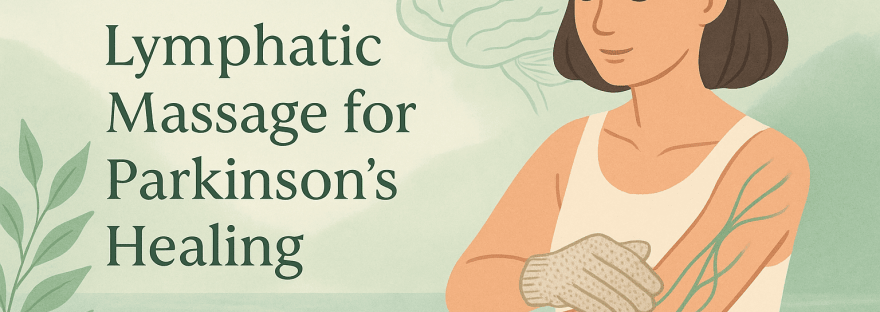
lymphatic drainage massage gloves used to support detoxification, improve circulation, and reduce inflammation in natural Parkinson’s healing routines
Lymphatic Health, Parkinson's

Why Lymphatic Health Matters in Parkinson’s—and How Massage Gloves Can Help

When managing Parkinson’s disease, most people focus on the brain—and rightly so. But healing requires more than dopamine support and medication. There’s a powerful, often overlooked system that plays a major role in your recovery: the lymphatic system.


Why the Lymphatic System Matters in Parkinson’s

Your lymphatic system is your body’s internal drainage network. It helps:

  • Remove toxins, inflammatory waste, and pathogens
  • Circulate immune cells to fight infection
  • Regulate fluid balance and reduce swelling
  • Support brain and nerve detoxification

For those with Parkinson’s—where inflammation, oxidative stress, and neurotoxins are already at play—supporting lymphatic flow is essential. A sluggish lymph system can worsen symptoms like fatigue, brain fog, stiffness, and poor detox tolerance.


Brain Detox: The Glymphatic System

Your brain has its own “lymphatic” system, called the glymphatic system, which:

  • Flushes out waste and damaged proteins
  • Activates during deep sleep
  • Helps clear inflammatory compounds from the brain

Poor sleep, chronic stress, and lymph stagnation can slow this process—contributing to neurodegeneration and worsening symptoms in Parkinson’s. Supporting lymph flow improves this brain-cleansing cycle.


Enter: Lymphatic Massage Gloves

One simple way to support your lymphatic system from home is by using lymphatic massage gloves. You can use gloves like the ones from Chelsey Jean.

✅ Benefits of Lymphatic Massage Gloves:

  • Boost lymphatic circulation
  • Reduce puffiness, inflammation, and fluid retention
  • Improve energy, detoxification, and immune function
  • Calm the nervous system and support parasympathetic healing
  • Can be used daily in just 2 minutes!


How to Use Lymphatic Gloves

  1. Start with dry skin, ideally in the morning using the spiky side not the roller ball side.
  2. Brush inhttps://player.vimeo.com/video/475399815?h=800702796d” target=”_blank” rel=”noreferrer noopener”> light, upward strokes toward your heart and lymph nodes (underarms, groin, behind knees, chest, neck)
  3. Use very gentle pressure, like feathered strokes —you’re stimulating the skin, not scrubbing
  4. Then use the magnetic ball side of the gloves in the shower, or after applying LymFATic Cream or MagFATics spray.
  5. Follow with good hydration and movement (like a short walk) to flush the system

Watch a video by Chelsey Jean on how to use her gloves HERE

🚨IMPORTANT NOTE WHEN STARTING OUT 🚨

  • When starting out only use the gloves once every 4 or 5 days.
  • Just start with the spiky side of the gloves ONLY for the first month not the magnetic roller ball side.
  • The more toxic you are, the more you will “detox.” You will feel the effects such as a runny nose, tiredness, headaches, and flu-like symptoms if you over do it.


Why Lymphatic Health Matters in Parkinson’s

People with Parkinson’s often have:

  • A sluggish detox system
  • Increased inflammation in the brain and body
  • Greater sensitivity to medications and supplements
  • Swelling or fluid retention in the limbs
  • Poor mitochondrial function and fatigue

Supporting lymphatic flow can help reduce this burden, improving how the brain and body function—especially when paired with hydration, rest, and gentle movement.


My Recommended Tool: Chelsey Jean’s Lymphatic Massage Gloves

If you want to support your lymph health safely and effectively, I highly recommend Chelsey Jean’s lymphatic massage gloves.

These gloves are specially designed to:

  • Stimulate circulation without overwhelming the body
  • Improve detox, energy, and clarity
  • Support hormonal and immune health
  • Be part of a holistic self-care routine that feels good and works

🛒 ➡️ Click here to check them out and order:


Combine With These for Best Results

To maximise your results, pair lymphatic massage with:

  • 💧 Hydration – 1.5–2L of filtered water daily or in the USA your weight halved in ounces
  • 🚶 Gentle movement – walking, rebounding, stretching. Rebounding on a mini trampoline is one of the best ways to also cleanse the lymphatic system!
  • 🛁 Detox tools – Epsom salt baths, sauna, or castor oil packs. Hot & cold showers help  the lymph vessels contract when exposed to cold and relax when subjected to heat. The dilation of the lymph vessels pumps fluid. Their contraction also stimulates circulation in the lymphatic system flushing out toxins in the body.
  • 🌬️ Breathwork and nervous system supportGUPTA PROGRAM. Deep breathing helps you exhale toxins!
  • 🧠 Limbic retraining and deep sleep to support glymphatic detox with the brain. Also consider supplements like G-Lymph powder to help “detox” the brain.


Final Thoughts

The lymphatic system is one of the most underutilized healing tools—especially in Parkinson’s care. Supporting this system helps clear inflammation, improve detox, and bring the body into a state where healing can happen.

With Chelsey Jean’s lymphatic massage gloves, you have a simple, effective, and empowering way to support your healing—right at your fingertips.

👉 Click here to explore the gloves and start your daily lymph support

Live in Australia? We can send you these fantastic massage gloves!

Live in Melbourne, Australia? Consider a Lymphatic Treatment at our clinic!

Limbic-Retraining-Cell-Danger-Response-Healing-Brain
Parkinson's

How the Cell Danger Response Blocks Healing—and What Limbic Retraining Can Do About It

What Is the Cell Danger Response?

Imagine your cells as little workers in a town. When life is good, they make energy, communicate with each other, and keep everything running smoothly.

But when a threat arises—like toxins, chronic infections, emotional trauma, or stress—your cells go into survival mode. They shut down normal operations to focus on defense.

This is known as the Cell Danger Response (CDR)—your body’s way of protecting itself from harm.


What Happens When the Cell Danger Response Gets Stuck?

The problem is that sometimes, even after the threat is gone, your body doesn’t switch off the alarm.

When the Cell Danger Response stays active, your body gets stuck in chronic inflammation, poor energy, and immune system confusion.

You can’t fully heal in this state.


Common Triggers for the Cell Danger Response

Your body might enter and stay in CDR due to:

  • Chronic infections (e.g. Lyme disease, Epstein-Barr virus, mould illness)
  • Environmental toxins (pesticides, heavy metals, mould toxins, pollution)
  • Emotional or physical trauma
  • Mitochondrial dysfunction (the powerhouse of the cells creating cellular energy issues)
  • Ongoing stress (emotional, mental, or physical)

Even when these triggers are removed, your cells may continue to behave like they’re under attack.


Why You Can’t Heal While Stuck in CDR

When CDR is active:

  • Healing and cell repair slow down or stop
  • The immune system becomes overactive or depleted
  • Sensitivities to foods, supplements, and treatments increase
  • You feel wired but tired, with sleep problems and fatigue
  • Inflammation spreads, especially in the brain and gut

In Parkinson’s disease, this is particularly concerning, since CDR can worsen:

  • 🔥 Neuroinflammation (Brain Inflammation) – In Parkinson’s, brain cells are already inflamed. The CDR adds more stress by keeping the brain in “attack mode,” which can speed up damage and worsen symptoms like brain fog, mood changes, and fatigue.
  • Mitochondrial Stress (Energy Breakdown) – Mitochondria are the cell’s batteries. In Parkinson’s, they don’t work well—and the CDR makes it worse by lowering energy production even more. This leads to more fatigue and poor healing.
  • 💔 Dopamine Loss – Parkinson’s symptoms are due to the loss of dopamine, the brain chemical that controls movement and mood. The inflammation and stress from the CDR can damage these dopamine-producing cells even further.
  • 🔄 Autonomic Imbalance (Nervous System Confusion) – The part of the nervous system that controls things like digestion, heartbeat, and temperature can go haywire. The CDR keeps the body stuck in “fight or flight,” making these symptoms worse.


The Limbic System: Your Internal Alarm Center

The limbic system is the part of your brain responsible for:

  • Processing fear and safety
  • Emotional memory
  • How your body responds to stress
  • Regulating inflammation and gut function

When the limbic system is overstimulated by illness, trauma, or stress, it continues to send danger signals—even after the threat is gone.

This keeps the Cell Danger Response switched on, preventing full recovery.


How Limbic Retraining Helps Heal CDR and Parkinson’s Symptoms

Limbic retraining helps rewire the brain so it no longer stays stuck in survival mode. It signals to the body: “You’re safe now. It’s okay to heal.”

Benefits of Limbic Retraining:

  • ✅ Calms inflammation in the brain and body
  • ✅ Lowers stress hormones that worsen Parkinson’s symptoms
  • ✅ Supports digestion, sleep, and nervous system function
  • ✅ Reduces sensitivity to foods, supplements, and toxins
  • ✅ Encourages neuroplasticity (the brain’s ability to rewire and repair)


Real-Life Analogy: Resetting Your Internal Alarm

Think of your limbic system as a home alarm. If it goes off 24/7—even when there’s no intruder—you can’t relax, sleep, or heal.

Limbic retraining resets the alarm, so your body can stop wasting energy on defense and start focusing on rebuilding and restoring.


Popular Limbic Retraining Programs

If you’re ready to try this approach, these are some of the most trusted programs:

🧘 Gupta Program – Combines breathwork, meditation, and brain retraining exercises.

🌀 DNRS (Dynamic Neural Retraining System) – Uses visualization and movement to gently rewire survival patterns.

🌱 Primal Trust – Focuses on somatic healing, safety, and nervous system regulation.

The GUPTA Program offers a 28 day free trial so many start here. The DNRS program has a 7 day free trial.

Simply start with 15 minutes a day. Do not feel overwhelmed and feel you need to follow the programs entirely from the start. The programs may suggest an hour a day but start small and being consistent is best.


Bottom Line: You Can’t Heal in Survival Mode

The Cell Danger Response is a major reason why so many people with chronic conditions—including Parkinson’s—struggle to get better.

Limbic retraining helps calm your nervous system, turn off the danger signals, and shift your body back into healing.

✅ Want to Learn More About Healing Your Body Heal from Parkinson’s?

Sign up for our Healing Program and have 5 one on one telehealth consultations with experienced naturopath Lisa who will guide you on your healing journey.

Detox, Parkinson's

Understanding the Brain’s Waste Clearance System

The brain waste clearance system is important for neurological health as it is responsible for the efficient clearance of neurotoxins and metabolic waste from the brain and brain tissue, including soluble proteins associated with neurodegenerative disease such as including amyloid-beta and alpha-synuclein.

The brain waste clearance system, also know as glymph, is a complex network of fluid channels and mechanisms within brain tissue. It functions as an exchange between fresh cerebrospinal fluid (CSF) flowing into brain tissue, replacing the interstitial fluid that contains accumulated brain waste. After the brain waste is flushed out of brain tissue, it drains into the lymphatic system for elimination from the body. 

The brain waste clearance system function is sleep-dependent, which has led to renewed interest in the health consequences of chronically disrupted sleep and the importance of supporting high-quality sleep to promote both long and short-term brain and cognitive health. Without adequate sleep or with reduced sleep quality, brain metabolic waste and neurotoxins accumulate in the brain, potentially compromising neurological and cognitive function. 

After clearance from the brain tissue, brain waste ultimately drains into the lymphatic system. Poor lymphatic system function and body elimination processes may influence the efficiency of the brain waste clearance system. 

Improving the glymphatic system can help manage neurodegenerative conditions such as Parkinson’s by enhancing waste clearance in the brain and reducing neuroinflammation. Below are steps you can take, with a focus on practical lifestyle changes and interventions that support glymphatic function:

1. Optimize Sleep Quality

  • Prioritize Deep Sleep: The glymphatic system is most active during slow-wave sleep. Focus on achieving sufficient, uninterrupted sleep each night (7–9 hours for most adults).
  • Establish a Routine: Maintain consistent sleep and wake times to support circadian rhythms.
  • Create a Restful Environment:
    • Use blackout curtains and minimize noise.
    • Avoid screens 1–2 hours before bed to reduce blue light exposure.
  • Supportive Supplements: Lemon balm, magnesium, glycine and herbatonin (ingredients in G-Lymph Clear) may promote relaxation and improve sleep quality.

2. Maintain Healthy Hydration

  • Proper hydration is essential for the flow of cerebrospinal fluid (CSF), which drives waste clearance in the glymphatic system.
  • Drink enough water throughout the day but reduce fluid intake in the evening to prevent sleep interruptions.

3. Encourage Proper Sleep Posture

  • Sleep on Your Side: Studies suggest that side sleeping may enhance glymphatic clearance compared to sleeping on your back or stomach.

4. Support Cardiovascular Health

  • The pulsation of cerebral arteries drives glymphatic flow. Improved cardiovascular health promotes this mechanism.
  • Regular Exercise:
    • Engage in moderate-intensity aerobic exercises like walking, swimming, or cycling.
    • Aim for a minimum of 150 minutes of exercise per week.
  • Heart-Healthy Diet:
    • Focus on whole foods, healthy fats, and plenty of vegetables and fibre.
    • Limit processed foods, saturated fats, and excessive salt.

5. Promote Lymphatic Drainage

  • A healthy lymphatic system is crucial for removing waste cleared by the glymphatic system.
  • Gentle Movement: Regular movement and stretching support lymphatic flow.
  • Massage Therapy: Lymphatic drainage massage can stimulate lymph flow and aid in detoxification.

6. Manage Stress and Inflammation

  • Chronic stress can impair sleep and increase inflammation, both of which negatively impact the glymphatic system.
  • Mindfulness Practices:
    • Engage in yoga, meditation, or breathing exercises to reduce stress.
  • Anti-inflammatory Diet:
    • Include omega-3-rich foods and antioxidant-rich fruits and vegetables.
    • Avoid pro-inflammatory foods like sugar, refined carbs, and processed snacks.

7. Reduce Neurotoxins and Pollutants

  • Avoid exposure to environmental toxins like pesticides, heavy metals, and air pollutants, as they can burden your brain’s detox systems.
  • Detox Support: Ensure liver health through a balanced diet, hydration, and foods like cruciferous vegetables (e.g., broccoli, cauliflower, kale).

8. Consider Natural Supportive Supplements

  • Supplements that support glymphatic and brain health include BioClinic G-lymph Clear which contains:
    • Ginkgo Biloba: Improves cerebral circulation.
    • Choline: Supports neurotransmitter production and detoxification.
    • Calendula: Promotes lymphatic and systemic detoxification.
    • Centella Asiatica (Gotu Kola): Enhances cognitive function and brain health.